So this writing about my thoughts for myself thing is fairly new to me. In the past, I’ve written for myself, but it’s always been private. And then when I’ve written publicly, it was always for a grade or for research or, honestly, a paycheck. I hope that you can extend a little grace to me as I find my footing here and carve out what I want this space to be. As I’m sitting here trying to make the words flow today, I’ve decided to throw out my carefully planned notes on what, at one point, I thought you might want to read, and instead tell you a bit about one of my favorite places in all of Prague; Vyšehrad.
Vyšehrad from Above
Part of the reason I love Vyšehrad is that the entire place is magic. And by the end of this post, hopefully you’ll believe that as well. No matter where I am in the neighborhood, my mind is never far from its legendary past and the heroes of Czech mythology enshrined at the top of its hill. The whole place seems to hum with something–and if you’re not as whimsical a thinker as I am, you might chalk that up to the stunning views that meet you throughout the neighborhood. I’ll admit that you might have a point there too. I love Vyšehrad for a lot of reasons, as you’ll see, but one of the biggest parts of my love has to be that for me in so many cases, Vyšehrad is where my journey into Czech culture, mythology, language, and even the Czech Republic itself started.
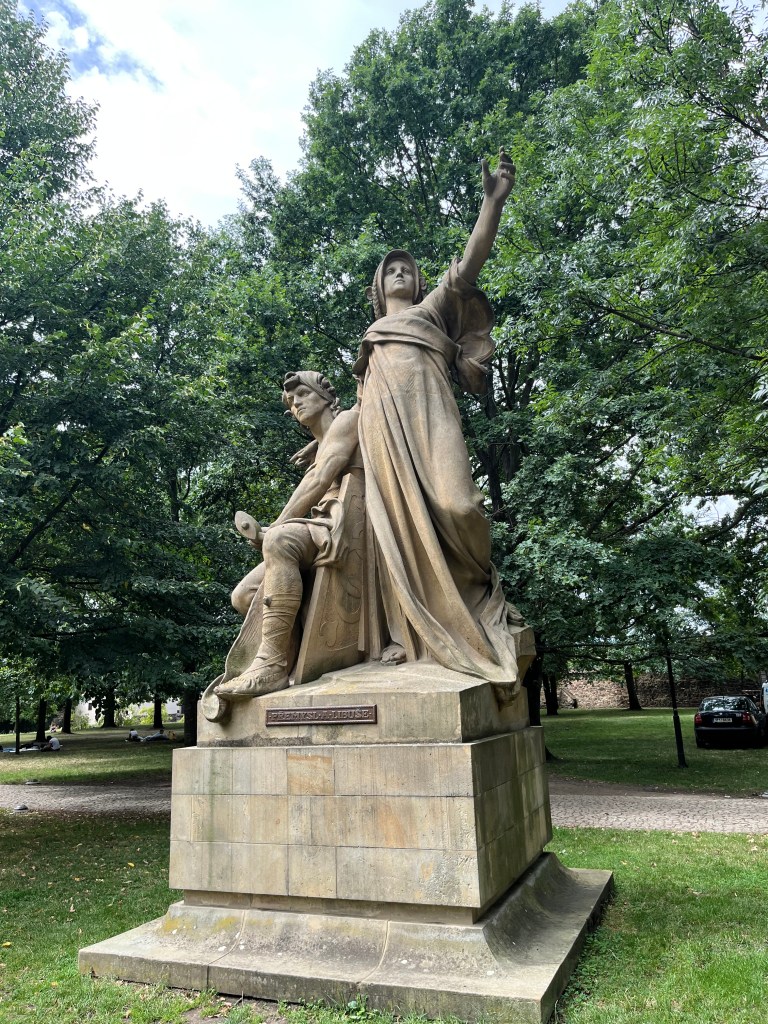
Vyšehrad is ancient, and even though there is a modern neighborhood there that continues to bear this name, you never get too far from those ancient stories when you’re there. For me, Vyšehrad was a subject of fascination because I grew up hearing about it. Czech legends were mixed into the regular rotation of stories my sister and I were told as children, and (maybe because my family comes from not far outside of Prague itself), the legend of Libuše, the beautiful, young queen who possessed the power of prophecy and foretold the foundation of Prague really stuck in my head. (Though, as an good historian will tell you, those details may have been a bit more modern than the National Awakening forefathers really wanted to admit, but that’s a longer story for another time) Vyšehrad literally comes alive with the legend of Libuše though, and you can see her statue standing at the highest point (also apt as the name Vyšehrad can literally be broken down to mean “high castle”), pointing to the city of Prague below her all-knowing gaze.
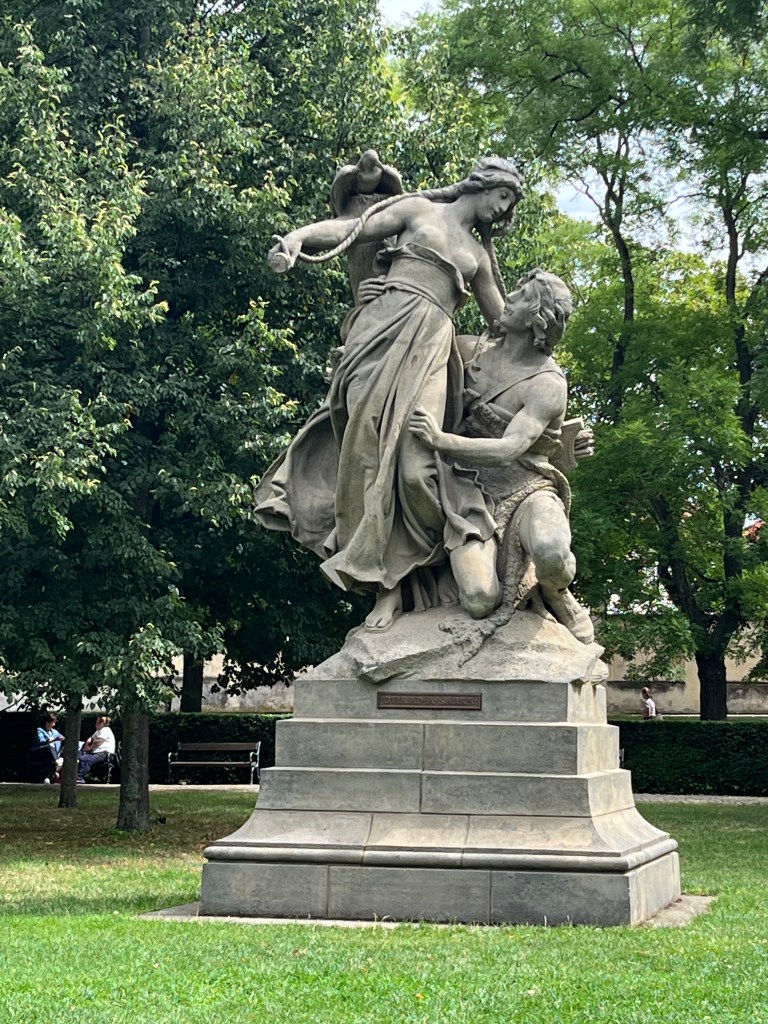
Joining her there, of course, is another statue in honor of the Maiden War, a time shortly after the death of Libuše when the women who were once respected were being suppressed and waged war against the men who were doing the oppressing. It’s a fun old legend, and can perhaps be most succinctly boiled down to the story of the fierce warrior, Šárka, and her nemesis/lover (depending on whose version you’re listening to) Ctirad, who she tricked into betraying his comrades in the name of feminism. Šárka’s legend can be seen beautifully rendered in a number of operas, including those by Smetana and Janáček, though any Czech will probably tell you that the true, enduring monument to her story is that of the park, Divoká Šárka,(Wild Šárka) located on the outskirts of Prague. Because you know you’ve made it in the Czech Republic when they name a park after you. Not only does it have some great hiking trails, but it’s also home to a spring-fed swimming pool where many go to cool off in the height of summer. And these aren’t the only legends that haunt Vyšehrad. If you make your way to the vineyard-studded cliffs, you’ll see the rocks that Horymíř and his magic horse, Semík leapt over to escape to the Vltava river below.
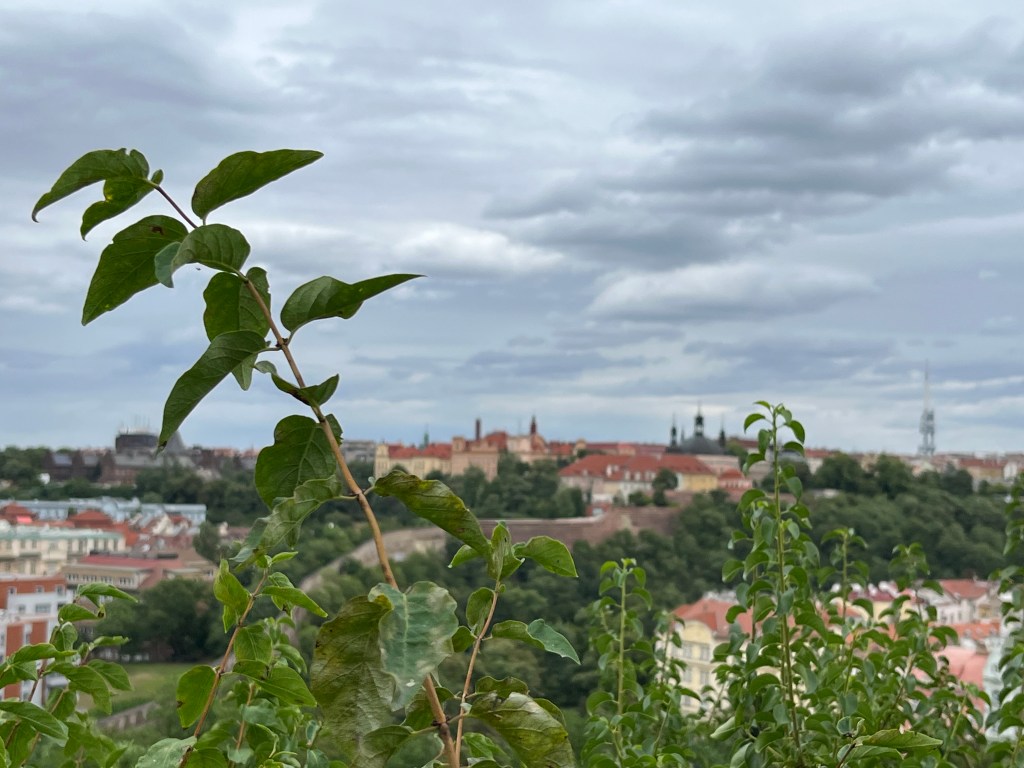
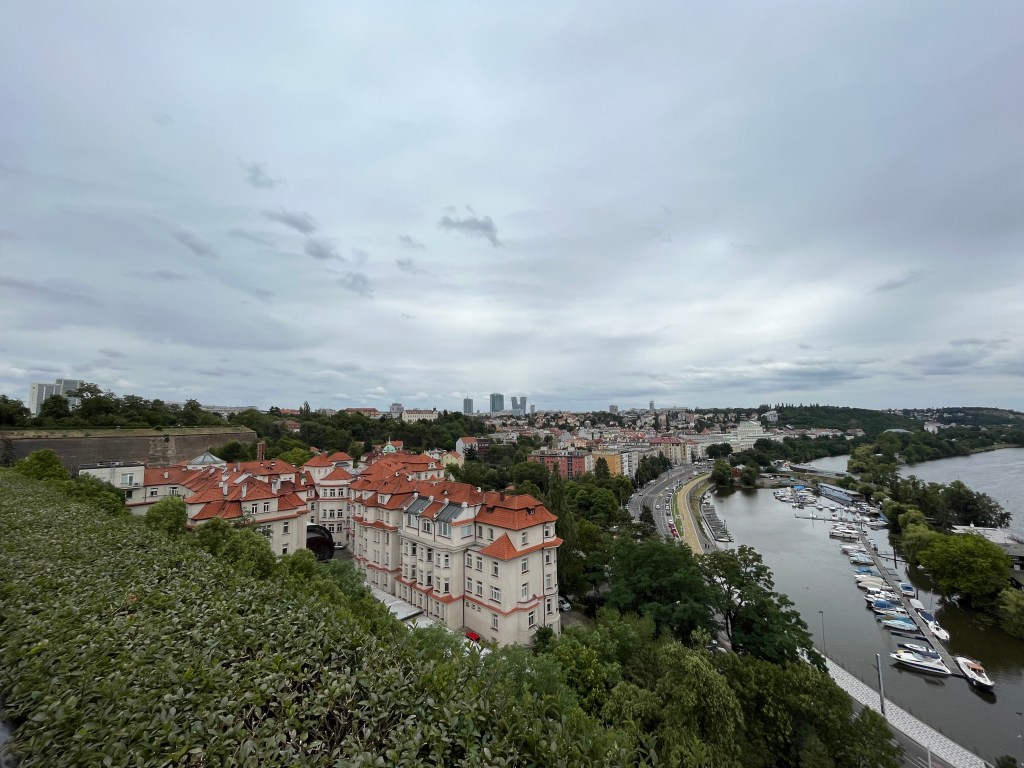
All legends aside, it’s this view that keeps me coming back to Vyšehrad. It’s a quick walk from the metro and full of benches and the old fortress wall from when Vyšehrad was a storehouse of gunpowder for the military. Depending on the season, you’ll look out over leafy vines or their scraggly branches, but what you see is all of Prague laid out at your feet with the Vltava snaking through like a vein of silver. It’s especially gorgeous at golden hour, but you can’t go wrong whatever time of day you make it. It’s the view that makes a million instagram posts, and if you’re a little bit romantic will have notes of Má Vlast echoing in your ears.
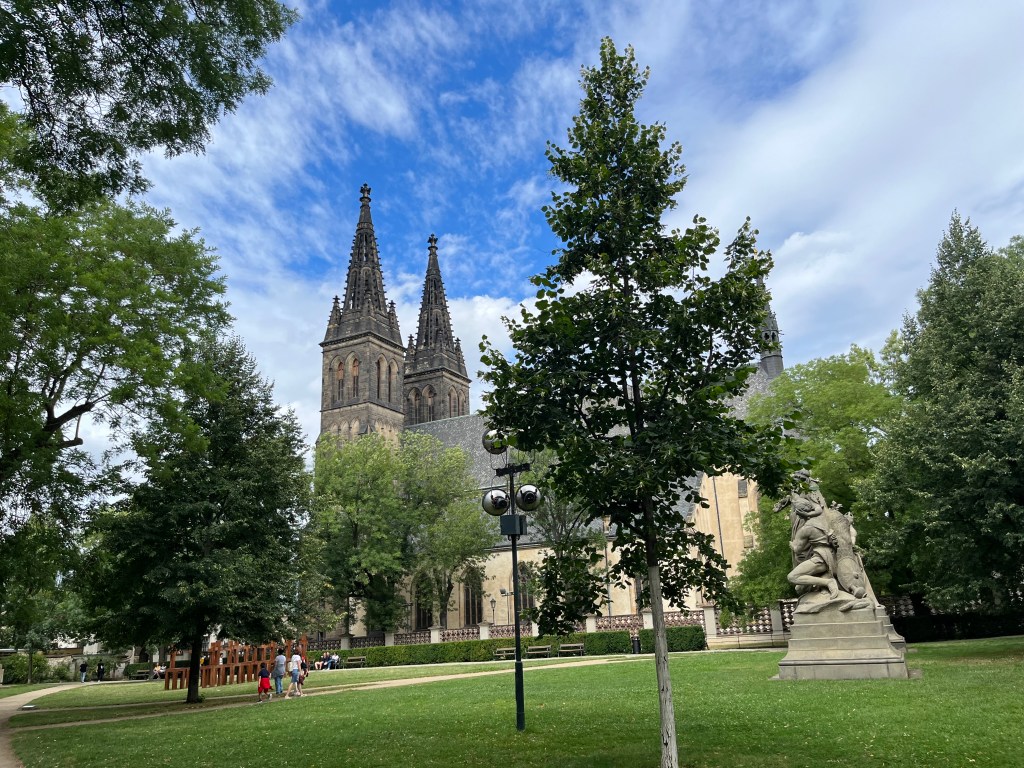
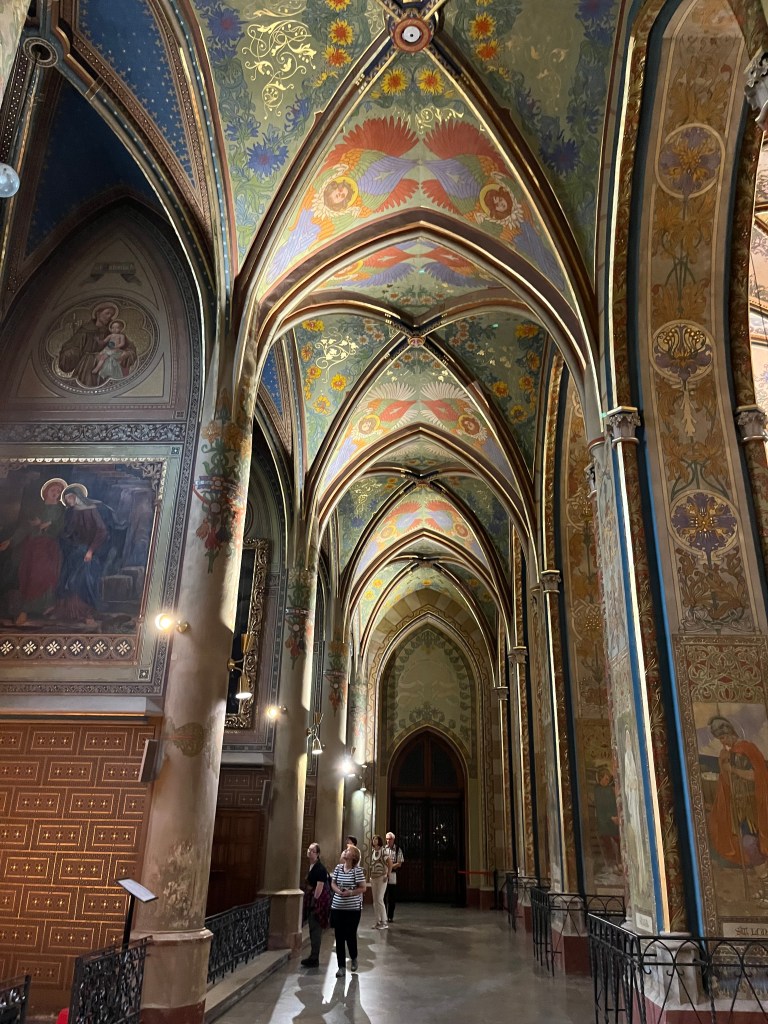
From there, follow the cobbled path to make your way to the Basilica of Sts. Peter and Paul (Bazilika sv. Petra a Pavla na Vyšehradě). Prague is a city full of gorgeous cathedrals, but in my opinion this is one of the most gorgeous, mainly because it’s covered in gorgeous colors painted on the doors outside, and, if you’re willing to pay the entrance fee (which I would highly recommend) is continued in the art nouveau frescoes covering the walls and ceilings inside. While Prague Castle is the center of historical Bohemian royal life, Vyšehrad, which was the supposed spot from which Libuše foresaw the building of Prague, serves as its more mythic foil. The original parts of the Basilica date back from the time of Vratislav II and the second part of the 11th century, when he wanted to affiliate he reign more closely with that mythic past. Like many of the European churches, the full construction took centuries–over 9 to be exact, and building wasn’t completed until 1903. In my mind, the work was well worth it, and the basilica is one of the most peaceful places I can think of to visit if you’re interested in art, architecture, or even their collection of garnet ornaments that the church has amassed over the years.
Of course, no church is complete without a cemetery, and while some might dismiss walking through those as morbid, the cemetery at Vyšehrad is almost required for anyone interested in Czech history. Not only does it contain graves designed so beautifully that are truly art in their own right, but it’s also home to the resting place of over 600 notable forces in Czech history, music, and culture. Here you’ll find the names of famous writers, scientists, poets, artists, composers, actors, doctors, politicians and so many more. As you walk along the rather leafy paths, you’ll see the names of Bedřich Smetana, Karel Hynek Macha, Milada Horáková, Božena Němcová, Karel Čapek, Alphonse Mucha and the like. On the eastern side of the cemetery, you’ll find the Slavín tomb, which is the giant tomb of some of the greatest national figures. Seeing monuments to so much creativity and courage in one of the most gorgeously stunning locations is enough to make anyone feel inspired to complete their own staggering works of genius.
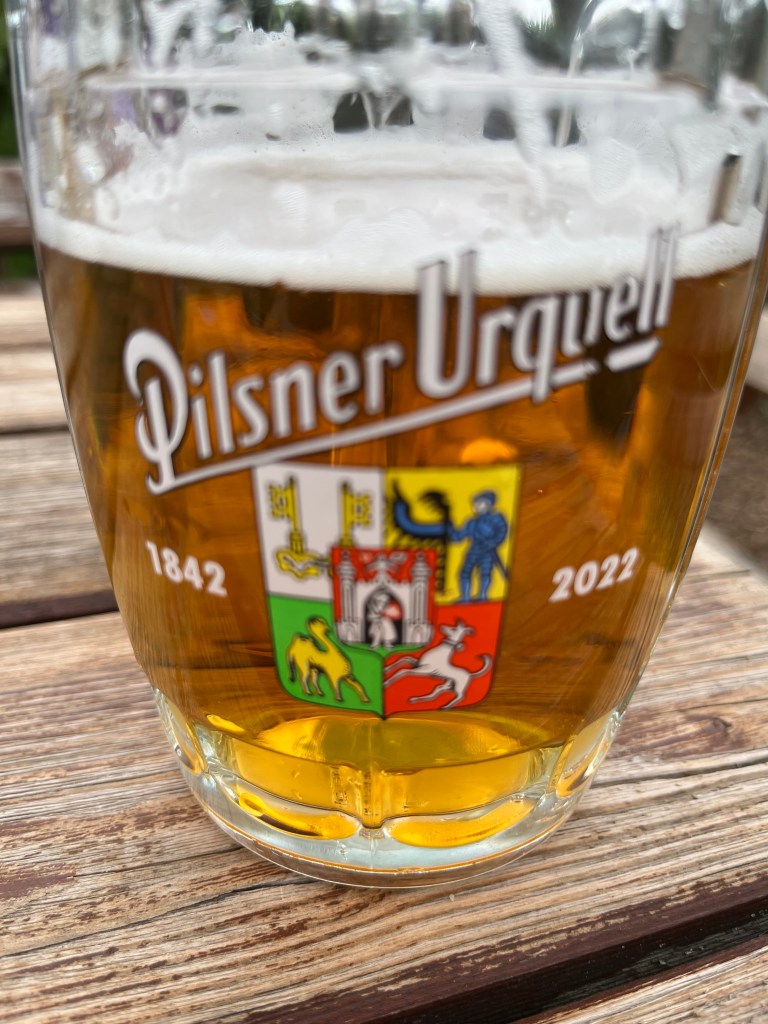
Contemplating mortality and staggering works of genius is heavy work. There is, however, a typical Czech solution right around the corner when you leave the cemetery thankfully, and by that I mean a walk through some even more gorgeous natural scenery and a well-placed beer garden. In years passed, the beer garden at Vyšehrad has been a lush spot to sit down at picnic tables with friends after a long walk. It’s surrounded by green hedges and walled in, but if you look over the tops of those walls, you can take in the park all around you. This year, it’s under new ownership and as I write this, I haven’t yet had the change to see if the atmosphere is the same, so that’s where you come in. Your mission–should you choose to accept it–is to go to Vyšehrad and report back to this American. I promise I’ll take a look when I’m next in Prague too!
Vyšehrad from Below
Before you go off on your grand Vyšehrad adventure, I do also want to make sure you know you have some options. Maybe you’ve done a ton of cathedrals and history already. Maybe you don’t love great views and legends. I probably don’t understand you, but hey, it’s important to do what speaks to you. What I can understand, though, is maybe you’d like to get a better feel for the neighborhoods, and hence, the people who call Vyšehrad home. If that’s the case, then I bring you option #2, or, an extension of your Vyšehrad adventure; exploring the neighborhood from below.
At the start of this I mentioned that Vyšehrad has a big part of my heart and helped me to fall in love with Prague. While I love the views from above, most of this is honestly in part to the time I spent in the neighborhood below “the high castle” where it always seemed like those figures from the Czech legends were somehow watching the neighborhood below the hill is fascinating both currently and has played a vital role in Czech history.
A few steps away from Karlovo Náměstí, or Karlák, if you, like me, like to use the slang names for places, you’ll find quaint neighborhoods clustered around the Výtoň and Albertov tram stops. If you’re interested in checking out shops or things to eat, you have a plethora to choose from in the area. From slightly fancy Czech pub cuisine at Potrefená Husa to hanging out at the French wine bar Na Břehu Rhony (On the banks of the Rhone), you have a ton of choices. I also really love walking around and ducking into whatever cool looking neighborhood hospoda you see–you really can’t go wrong.
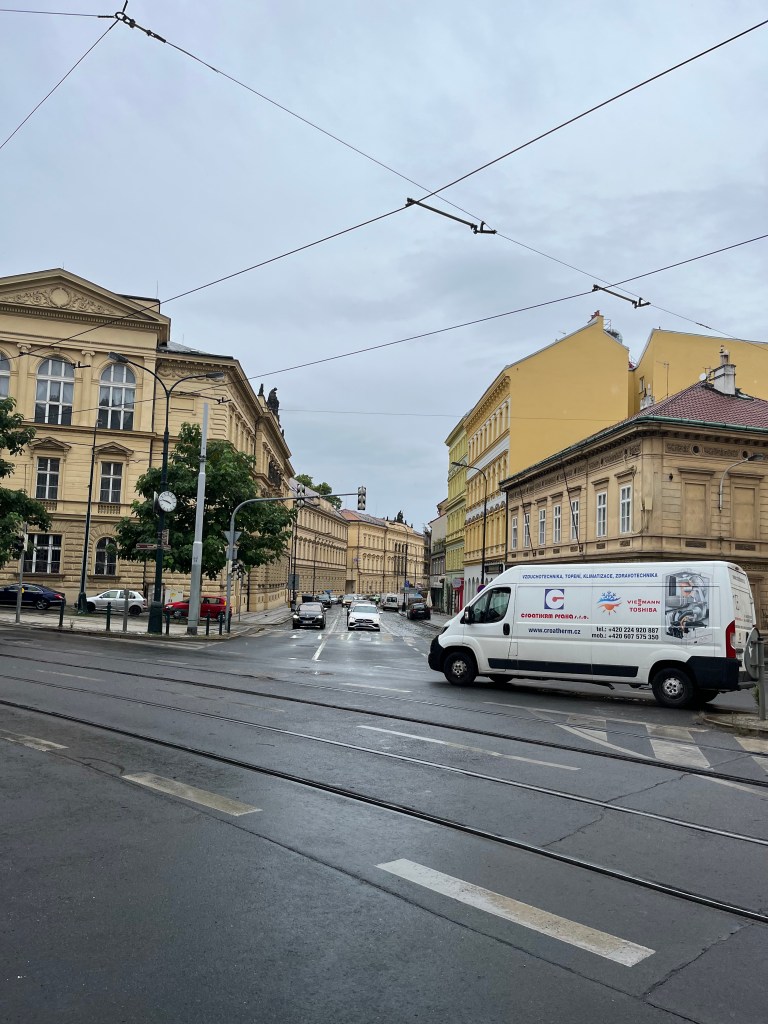
My love for this neighborhood stems a lot from making the trek from Žižkov multiple times a week for years to take Czech language classes at the Charles University facilities below the hill, and deepened when I learned a bit of the history that happened in those exact places. Today, the area is full of a few different buildings and Charles University campuses, from the medical school to places to study natural sciences and a truly impressive botanical garden. It’s peaceful and green, but hasn’t always been that way.
Albertov has a long history as a center for student protests, first in November 1939 to protest the Nazi occupation, which resulted in the deaths of two people, as well as the shut down of Czech universities and deportation to prison and concentration camps and murder of students. International Student Day is a global commemoration of this bravery and horror. The second set of protests also took place in November, as a memorial to the students and others who died protesting fascism, though this time in 1989. On Friday, November 17th, 10,000+ students gathered at Slavín on the hill above for a memorial to the murdered student Jan Opletal who died in 1939. From there, they marched towards Národní třída peacefully, calling for democratization and civil rights, only to be met with intense brutality by the local police. The students fled, leaving behind a bloody street, rumors of deaths by police violence, and a shocked general public. It was this assault and incidence of police violence that kicked off the Velvet Revolution with more protests to follow, and the rest, as they say, is history.
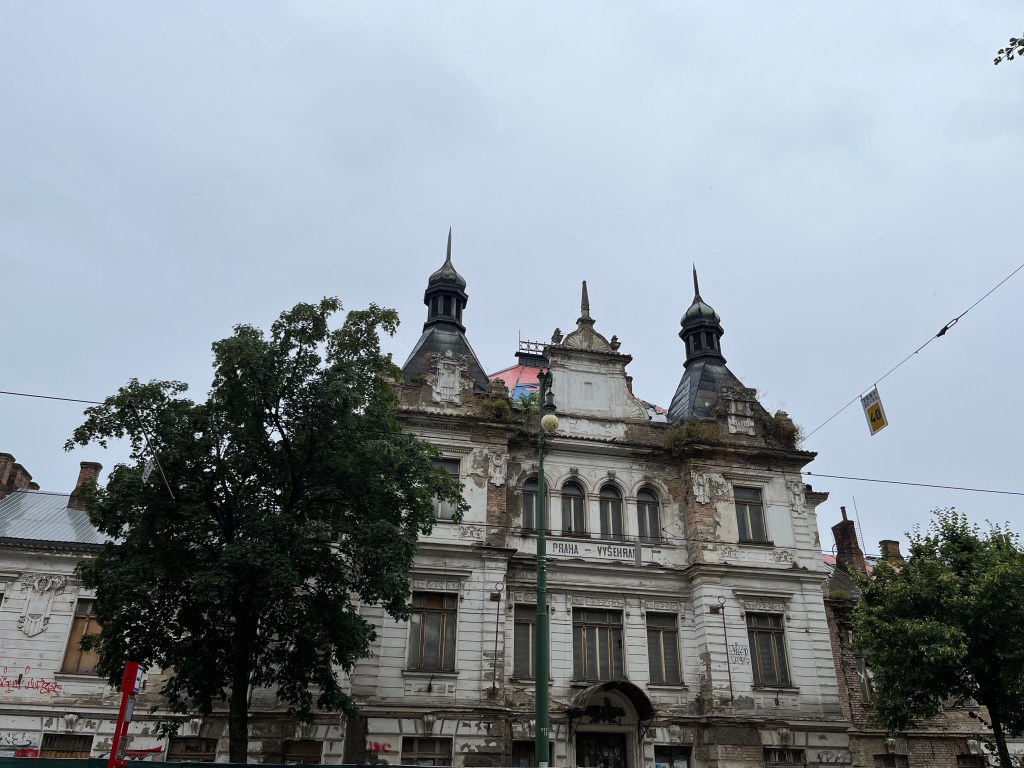
In my mind, in order to truly appreciate a place in the present, you have to be able to acknowledge the past. Only then can you really see the truth in a place, which is the true beauty. Vyšehrad lacks none of that truth. The cobbled streets are both winding and hilly and wholly orientated around the hill above, making them an ideal place to walk around and explore. I really love Pod Vyšehradem if you’re looking for one with great vibes. I can’t really explain it, but you’ll feel it when you’re there. As you walk, you might stumble upon the crumbling, old Vyšehrad train station. Though it’s abandoned and falling apart, you can’t miss the sense that this was once a gorgeous hub, and this could also just be me, but there’s something a bit romantic and also a bit sad about the greenery overtaking the ruins these days.
From there, it’s a short walk to the banks of the Vltava, where you can take in the Railway Bridge (železniční most) as it hovers over the red roofs and gothic spirals surrounding the river. If you’re up for a walk, it’s a short trip to Náplavka, where in the weekend mornings you’ll find a bustling farmers market and in the evenings live music, riverside bars, and locals and tourists alike sitting down to dangle their legs over that ancient river with a bottle of wine or cold beer. After all, that’s the best way to take in the sites and sounds of Prague. The laid back sense of community at the end of the day surrounded by incredible sites is the real magic.

 Bri in between
Leave a comment